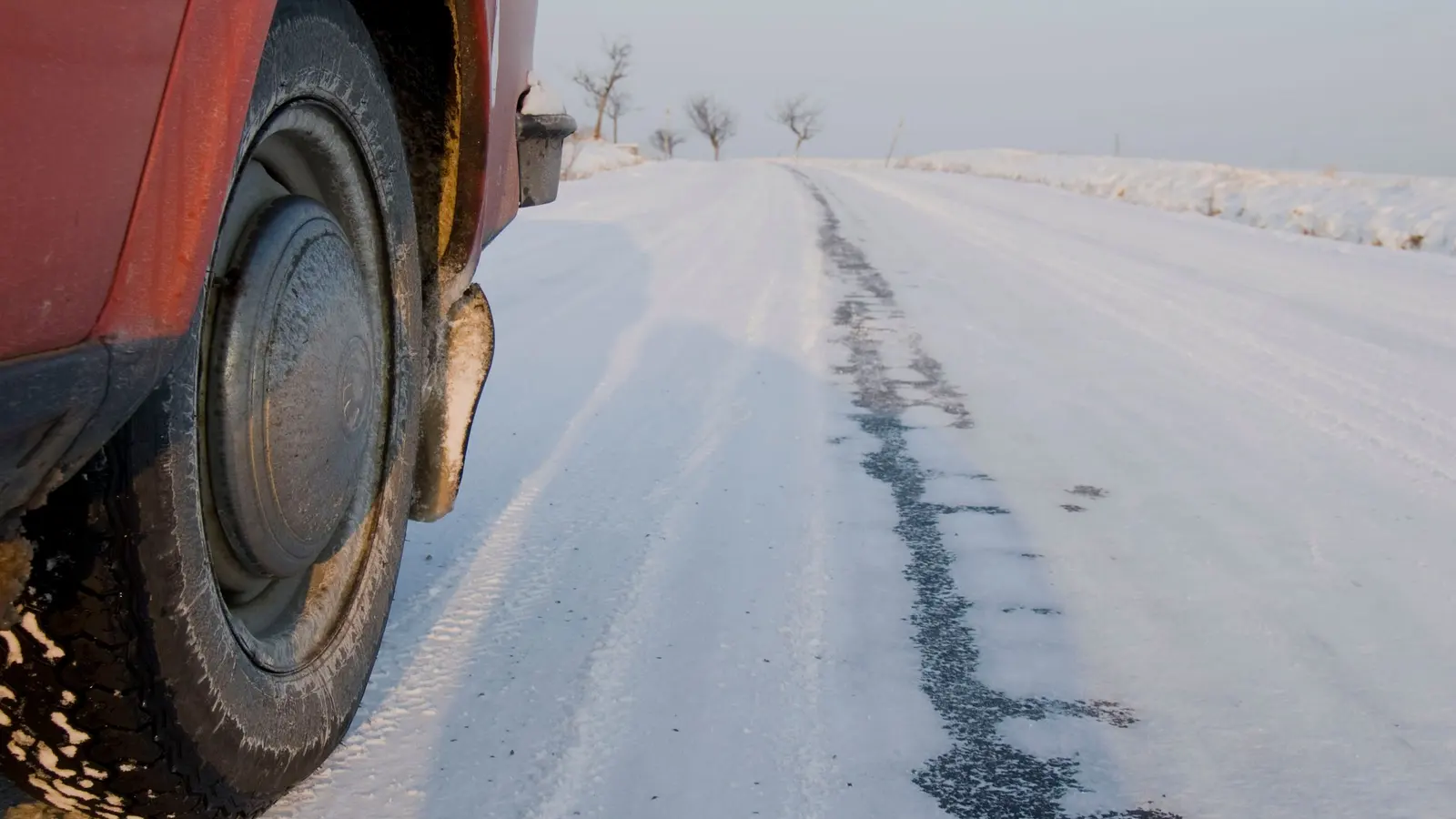
Short answer: front-wheel drive helps a car get moving in snow. It does nothing for stopping or turning. Tires do that. Four winter tires make a front-wheel-drive car stop and steer far better on snow and ice than all-season tires. Two winter tires on the front only is the one setup tire makers tell you not to run.
Whether you need them around Audubon is a closer call than it is in Buffalo, and the local climate record explains why. Here is the quick version:
- You drive whatever the weather is (early shifts, hospital work, hills, regular trips to North Jersey): four winter tires.
- You can wait for the plows and mostly drive treated roads: an all-weather tire with the mountain-snowflake symbol, or a newer all-season with plenty of tread, is a reasonable choice. Tire Rack says the same about cities at the edge of the snow belt, and it names Atlantic City.
- Any car, any budget: never two winter tires on the front axle alone.
Do You Need Winter Tires on a Front-Wheel-Drive Car?
Front-wheel drive has a real advantage, and it is narrower than most people think.
- Where FWD helps. Tire Rack puts it this way: part of a front-wheel-drive car's acceleration advantage is that "it has 60% of its weight over the drive wheels. And while this helps you get started, it does nothing to help you stop" (Tire Rack, Winter Tire FAQs).
- Where FWD is steady. Bridgestone notes a front-wheel-drive car is pulled along by its front wheels, so it is less likely to oversteer, and calls FWD "one of the most efficient setup options for moderate winter climates, especially with the right winter tires" (Bridgestone).
- Where FWD runs out. The same Bridgestone page says FWD can struggle more than AWD on steep, icy hills.
- What ABS and traction control add. Not grip. Tire Rack says these systems "don't provide more traction." They only keep you from overpowering or over-braking the traction your tires already have.
So the honest answer is about your tires and your roads, not your drivetrain. Tire Rack's test figures show the size of the gap (Tire Rack, published October 21, 2026):
| Test | Winter tires | All-season tires |
|---|---|---|
| Stop from 25 mph on snow | 56.1 ft and 57.3 ft | 81.1 ft and 84.5 ft |
| Stop from 12 mph on ice | 39.4 ft | 57.7 ft and 55 ft |
| 0 to 12 mph on snow | 23.97 ft | 36.44 ft |
| Stop from 50 mph, wet road near freezing | 117.6 ft and 129 ft | 99.3 ft and 111 ft |
The winter tires were the Michelin X-Ice Snow and the Bridgestone Blizzak WS90. The all-season touring tires were the Michelin Primacy Tour A/S and the Michelin Defender2. Tire Rack's article gives the ice stop for the X-Ice Snow only, and the snow acceleration figures for the Blizzak WS90 and the Defender2 only.
Read the last row twice. On snow the winter tires stopped roughly 25 feet shorter from just 25 mph. On a cold, wet road with no snow, the all-season tires stopped shorter. Tire Rack says so itself: "If most of your January involves 40-degree rain and bare pavement, maximizing ice traction at the expense of wet braking may not be the right trade. If frozen roads and accumulating snow are routine parts of the commute, the calculation changes quickly."
That sentence describes South Jersey closely. The next sections put local numbers on it.
Two Winter Tires or Four? Why Front-Only Is the Wrong Answer
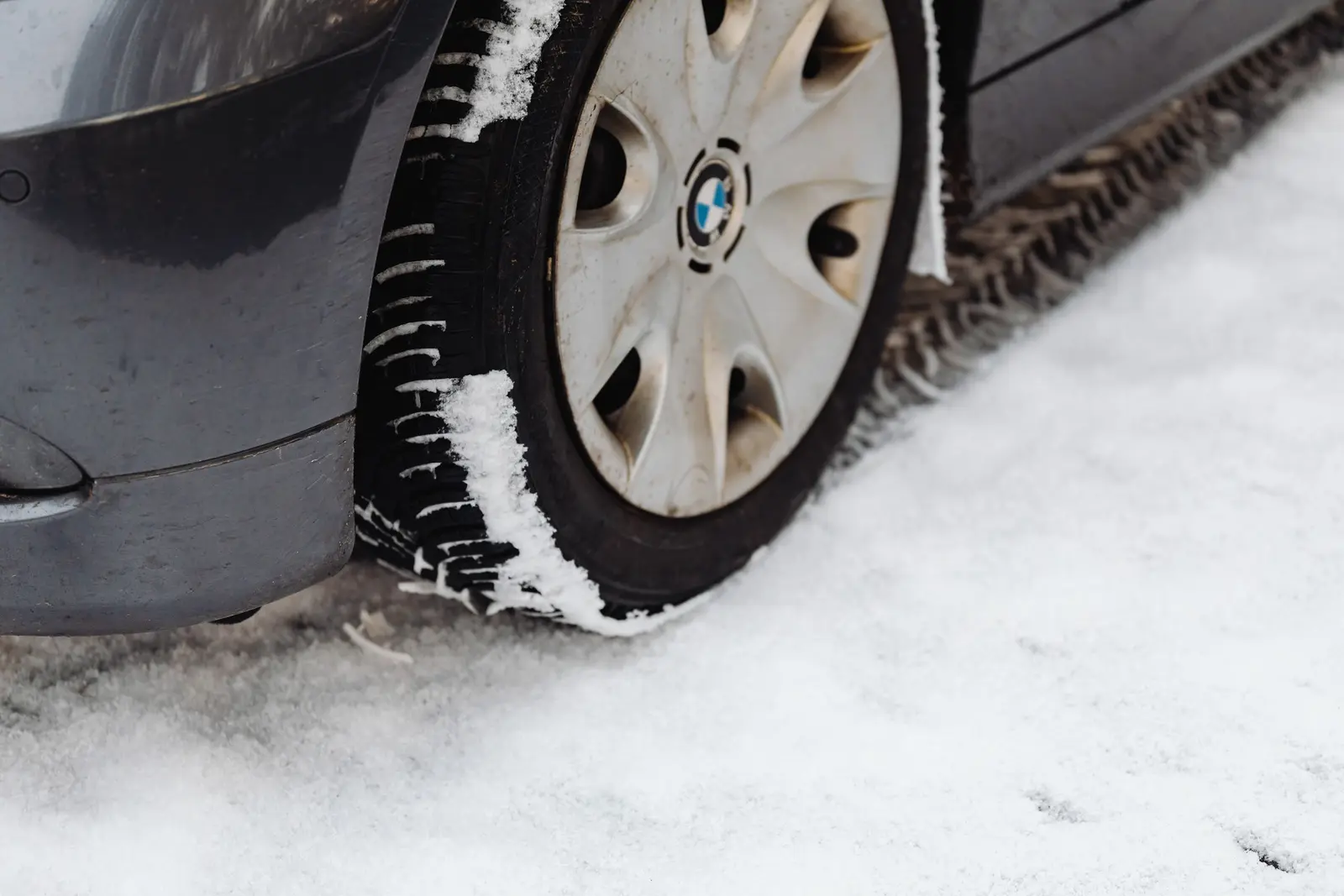
The idea is tempting on a front-wheel-drive car: the front tires pull, steer and do most of the braking, so put the two winter tires there and save half the money. Tire makers and tire retailers all say no, and they give the same reason.
- Bridgestone: "No matter what kind of vehicle you drive, never mount two winter tires on the front axle without also mounting them on the rear axle." The back wheels end up with less grip than the front, "a scenario that can throw you into a rear-wheel skid" (Bridgestone, Winter and Snow Tires).
- Tire Rack: winter tires on one axle only "create a vehicle with a split personality," and "the full benefits of ABS or traction control systems will be lost" unless traction is the same at all four corners (Tire Rack, Should I Use Four Winter Tires?).
- Les Schwab: asked if snow tires on the front only are okay, "the short answer is no." A front-wheel-drive car set up that way can end up "oversteering or fishtailing around corners or when applying the brakes," even at low speeds (Les Schwab).
- Transport Canada: "always install your winter tires on all wheel positions" (Transport Canada, Riding on Air).
- The count: Tire Rack says every tire maker it carries, and 7 out of 10 vehicle makers, recommend four winter tires on rear-wheel, front-wheel and four-wheel-drive vehicles (Tire Rack, Winter Tire FAQs).
Here is what goes wrong. With winter tires in front and ordinary tires behind, the front grips when you brake or turn on a slick road and the rear has less to hold it. Bridgestone's term is a rear-wheel skid. Les Schwab describes the result: "your back end will spin around." Bridgestone also notes that a front-wheel-drive car is normally less likely to oversteer. Front-only winter tires take that built-in steadiness away.
If four winter tires are not in the budget this year, a full set of all-weather tires is a safer compromise than two winter tires. The comparison is below.
All-Season vs All-Weather vs Winter Tires
The names sound alike. The marking on the sidewall tells you which one you have.
| All-season | All-weather | Winter | |
|---|---|---|---|
| Sidewall mark | M+S | Three-peak mountain snowflake (3PMSF) | Three-peak mountain snowflake (3PMSF) |
| What the mark proves | Nothing measured. Tire Rack: M+S is "simply based on the tread pattern geometry" | Passed a snow acceleration test | Passed the same test, and built for cold, snow and ice |
| Stays on all year | Yes | Yes | No. Bridgestone says warm-weather driving can wear winter tires out faster |
| Snow and ice | Light snow, best when the tread is still deep | A step up from all-season | The best of the three |
| The trade-off | More limited snow capability | Does not match a dedicated winter tire in severe snow and ice | Longer stops on a cold, wet road in Tire Rack's test, and it has to come off for warm weather |
Three facts about the mountain-snowflake symbol, all from Tire Rack's explainer:
- A tire earns it by reaching a traction index of 110 or more against a reference tire rated 100, in a standard test on packed snow.
- The test measures acceleration on medium-packed snow only. Braking and turning on snow, and all ice traction, are not part of it.
- Tire Rack's own conclusion: all-season and all-terrain tires carrying the symbol "cannot match the traction of dedicated snow / winter tires in all winter weather conditions."
So an all-weather tire is a real middle step, and a winter tire is still the specialist. Tire Rack describes all-weather tires as "a great option in cold metro areas that have reliable snowplow and road treatment services" (Winter Tire FAQs).
Whatever you run, tread depth decides how it works in slush. NHTSA's winter checklist says to make sure tread is at least 2/32 of an inch on every tire, and to replace tires with uneven wear (NHTSA). Our guide to how long tires last covers how to read wear.
How Much Winter Does South Jersey Actually Get?
Advice written for Minnesota does not fit Camden County. These are NOAA's 1991-2020 climate normals for the Philadelphia International Airport station, across the Delaware River from South Jersey (NOAA NCEI U.S. Climate Normals, station USW00013739):
- Snowfall: the monthly normals add up to 23.1 inches a year. February is the snowiest month at 8.4 inches, then January at 7.1, March at 3.6 and December at 3.5.
- Snow days: about 5.2 days a year with an inch or more of new snow, and about 12 days with at least a tenth of an inch.
- Snow on the ground: about 15.5 days a year with an inch or more lying.
- Cold nights: about 77 nights a year at or below 32°F. January's normal low is 26.0°F.
- Afternoons above freezing: January's normal high is 41.3°F, so even the coldest month usually thaws by afternoon.
The state climatologist's office at Rutgers gives the wider picture. Snow may fall "from about November 15 to April 15 in southern counties." Annual snowfall averages 40 to 50 inches in New Jersey's northern zone, against 10 to 15 inches in the extreme south (Rutgers, Office of the New Jersey State Climatologist).
Put those together and the South Jersey winter looks like this: about five days a year with an inch or more of new snow, a long run of cold pavement, and a far snowier northern half of the state. Tire Rack's own advice fits that picture. In cities "located at the extreme edges of the snow belt," and it names Atlantic City, "relatively new All-Weather and All-Season tires will probably work just fine. But the odds change as you move further into the snow belt or the All-Season tires have a few years of wear on them" (Winter Tire FAQs).
So the answer here depends on when and where you have to drive:
- Winter tires earn their place if you have to be on the road during those few storms, before the plows, or you drive north regularly.
- All-weather or newer all-season tires fit if you can sit out a storm morning. On a cold, wet road with no snow, Tire Rack's test had the all-season tires stopping shorter.
The same cold snap that tests your tires also finds a weak battery. If that is your morning, see car won't start in the cold.
When to Put Winter Tires On in New Jersey
The tire makers' rule is about temperature, not snow.
- Michelin: "Michelin recommends installing winter tires when daily temperatures consistently fall below 45°F. Waiting until the first snow can leave you unprepared for early frost, black ice, or sudden cold snaps" (Michelin).
- Bridgestone: have them installed "in late October/early November (or once the average daily temp dips below 45℉)" (Bridgestone). Its plain-language test: "if you're consistently able to see your breath, it's time to mount winter tires" (Bridgestone, Winter and Snow Tires).
- Transport Canada: below 7°C, which is about 45°F, "all-season and summer tires begin to lose elasticity, resulting in reduced traction" (Transport Canada).
Here is what that rule means on a South Jersey calendar. The temperature dates come from NOAA's daily normals for the Philadelphia airport station, the stud dates from New Jersey's rule, and the snow dates from Rutgers:
| Date | What happens |
|---|---|
| October 27 | The normal daily low drops below 45°F. Cold mornings start. |
| November 15 | Studded tires become legal in New Jersey. Snow becomes possible in southern counties (Rutgers: "about November 15"). |
| November 23 | The normal daily average drops below 45°F. This is the tire makers' swap point. |
| December 20 to February 18 | Even the normal daily high stays below 45°F. |
| March 21 | The normal daily average is back to 45°F. Time to plan the swap back. |
| April 1 | Last legal day for studded tires. |
| April 15 | About the end of the snow season in southern counties (Rutgers). |
| April 18 | The normal daily low is back above 45°F. |
In plain terms: around Audubon, have winter tires on by Thanksgiving week and off again around the last week of March. Those are 30-year averages, and any single year can differ, so watch the forecast from mid-November.
Do not leave them on into summer. Bridgestone says driving winter tires in the warmer months "can cause the tires to wear out faster," and Tire Rack says warm pavement costs you the wet and dry handling of a tire built for warm weather.
Studded Tires in New Jersey: November 15 to April 1
New Jersey's rule is one sentence: "No stud tire shall be used on a public highway earlier than November 15, or later than April 1, of any winter season" (N.J.A.C. 13:20-15.2(g)).
The same section sets limits on the tire itself:
- The tip of a stud may project no more than .060 inch from the surface of the tire.
- There must be at least 1/8 inch of rubber between the base of the stud and the body of the tire.
- Stud tires are not approved for tires run at a recommended pressure above 36 p.s.i.
Tire Rack classes the Michelin X-Ice Snow from the test above as a studless ice and snow tire, so these dates do not apply to tires like it. They matter if you run a studded set.
Do You Need Snow Tires on AWD?
The same logic applies, and it surprises people who bought all-wheel drive for winter.
- AWD helps you go. Bridgestone says AWD can help you get out of snowed-in parking spots, tackle unplowed roads and accelerate on slick surfaces.
- AWD does not help you stop or turn. Same page: "there is almost no difference between AWD-equipped vehicles and ordinary cars when it comes to cornering, braking and handling in winter weather."
- The tires set the limit. Tire Rack: "AWD, ABS, and stability control are remarkable technologies, but every one of them eventually has to work through four patches of rubber touching the road."
- Bridgestone's number: winter tires offer 25 to 50% improved traction over all-season tires.
For an AWD owner in South Jersey the choice is the same as for a FWD owner: winter tires if you must drive through the storms, all-weather if you can wait them out. And four matching tires either way.
Before the First Cold Snap: Pressure, Tread, Sensors, Alignment
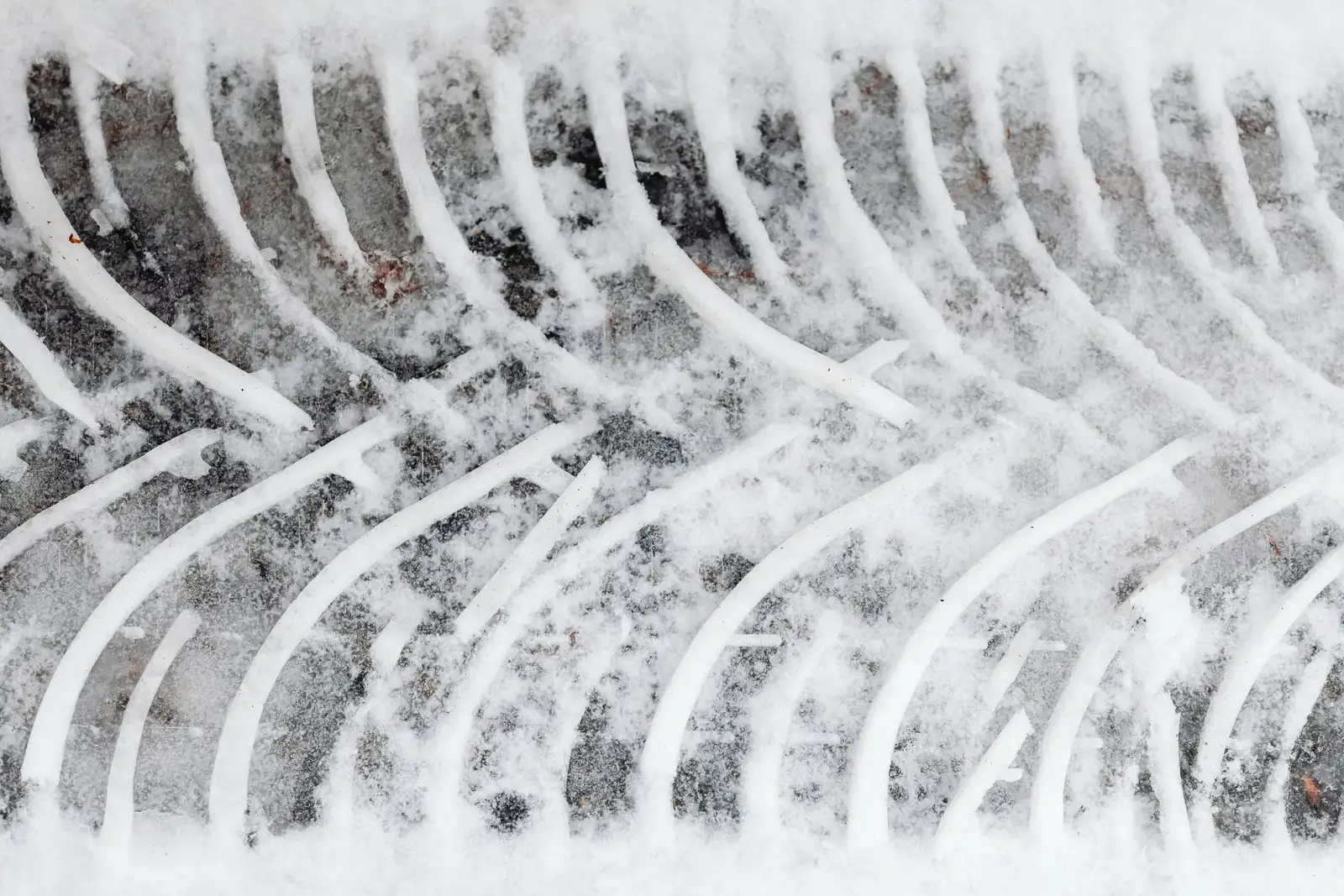
- Check pressure when the cold arrives. NHTSA: "As the outside temperature drops, so does tire inflation pressure." Fill to the number on the label on the driver's door frame, not the maximum printed on the tire (NHTSA).
- Check tread. NHTSA's floor is 2/32 of an inch on all tires. Tire Rack notes all-season tires do their best snow work when relatively new with plenty of tread depth.
- Think about a second set of wheels. Bridgestone suggests mounting winter tires on their own wheels so each seasonal swap is quicker, and adds: do not forget the sensors for the tire pressure monitoring system if your car has one.
- Look at how the old tires wore. NHTSA says uneven wear across the tread means the tires need rotation, the wheels need alignment, or both. Sort that out before a new set goes on. Our wheel alignment page explains what to look for.
Getting Winter Tires Mounted in Audubon
AutoBlast is at 21 S. White Horse Pike in Audubon. Our tire service covers what this guide describes: mounting and balancing a set of four, tires ordered through our distributors or a set you bring in, tire pressure sensor service, and tread depth measured on the tires you already have. Prices are on that page.
Call (856) 546-8880 with your tire size, which is printed on the sidewall and on the driver's door-frame label, and tell us whether you are deciding between winter and all-weather tires. If you already own winter tires on their own wheels, say so when you call.
Common Questions
Are front-wheel-drive cars good in snow with winter tires?
Yes, within limits. Bridgestone calls FWD one of the most efficient setups for moderate winter climates with the right winter tires, because most of the weight sits over the driving wheels. It also says FWD can struggle more than AWD on steep, icy hills. Winter tires improve stopping and turning, which front-wheel drive alone does not.
Can I put snow tires on just the front of a front-wheel-drive car?
No. Bridgestone says never to mount two winter tires on the front axle without also mounting them on the rear, because the rear can lose grip first and skid. Tire Rack, Les Schwab and Transport Canada say the same: four, on all wheel positions.
Can I use winter tires all year?
You should not. Bridgestone says warm-weather driving can wear winter tires out faster. Tire Rack's near-freezing wet test also had winter tires taking longer to stop than all-season tires. Around Audubon the normal daily average is back to 45°F by March 21.
Can winter tires go on my regular rims?
They can be mounted on the wheels you have, and swapped back in spring. Bridgestone points out that a second set of wheels makes each seasonal change much easier than mounting and un-mounting tires every year, and reminds drivers about tire pressure sensors for the second set.
When can I use studded tires in New Jersey?
From November 15 through April 1. N.J.A.C. 13:20-15.2(g) bars stud tires on public highways earlier or later than those dates in any winter season.
Sources
All checked November 10, 2026:
- Tire Rack, Winter Tires vs. All-Season: What the Tests Actually Show (published October 21, 2026)
- Tire Rack, Winter Tire FAQs
- Tire Rack, Should I Use Four Winter Tires?
- Tire Rack, What Is the Three-Peak Mountain Snowflake Symbol?
- Bridgestone, Do I Need Snow Tires If I Have AWD?
- Bridgestone, Winter and Snow Tires
- Michelin, Winter Tire Timing and PSI Tips
- Les Schwab, The Dangers of Using Just Two Snow Tires
- Transport Canada, Riding on Air
- NHTSA, Winter Driving Tips
- N.J.A.C. 13:20-15.2, stud tires
- NOAA NCEI, U.S. Climate Normals 1991-2020, monthly and daily, station USW00013739
- Rutgers, Office of the New Jersey State Climatologist, New Jersey climate overview
Need Help With Your Vehicle?
AutoBlast is Camden County's trusted auto repair and body shop. Send the page you are reading with your vehicle details, or call the shop for faster help.