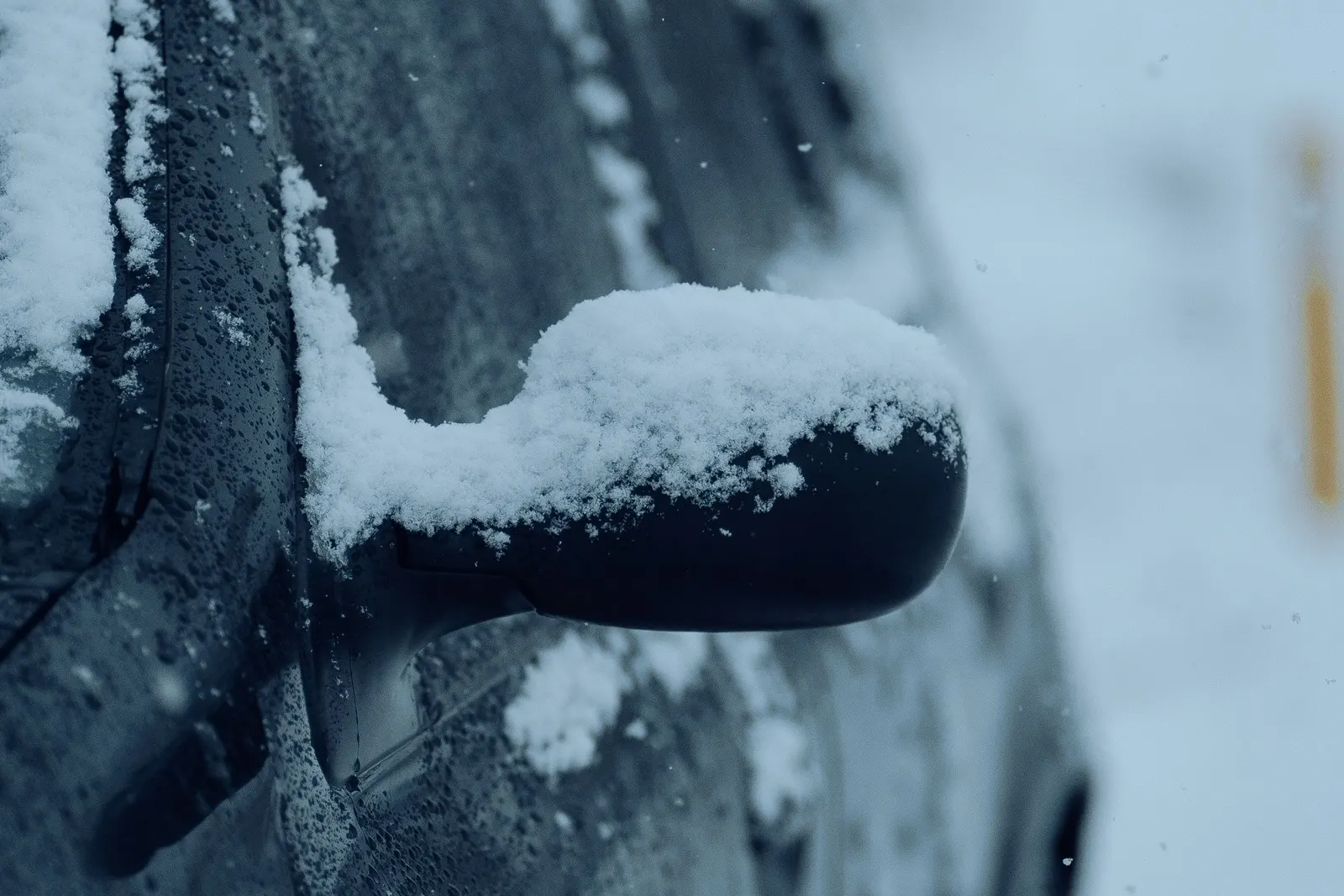
Your car will not start, and it is cold out. Before you try again, listen to what it does. A slow crank, fast clicking, one click, or a normal crank that never catches each point to a different problem.
Most cold no-starts come down to a battery that was already weak. Cold cuts the power it can deliver, and cold oil makes the engine harder to turn. January's average low at the Philadelphia International Airport weather station, across the Delaware River from South Jersey, is 26°F (NOAA 1991-2020 normals).
The step that matters most in New Jersey comes after the jump: drive the car, do not idle it. State rules cap idling at three minutes.
What to Do Right Now
- Turn everything off. Headlights, heater fan, defroster and heated seats all pull from the battery you need for cranking. Mazda's jump-start steps include switching off unneeded electrical loads in both cars (Mazda owner's manual).
- Listen to the start. A slow crank or fast clicking points to the battery. One click with bright dash lights, or a normal crank that never fires, points elsewhere. The table below sorts it out.
- Jump it the way your manual says, unless the battery may be frozen. Kia's and Mazda's manuals both warn that a frozen battery can rupture or explode when jumped (Kia, Mazda).
- Once it runs, drive it. New Jersey limits idling to three minutes when a car is not moving (N.J.A.C. 7:27-15.8). The U.S. Department of Energy says most manufacturers recommend driving off gently after about 30 seconds (fueleconomy.gov).
- Get the battery and the charging system tested. NHTSA's winter checklist says to have a mechanic check both (NHTSA). A jump gets you moving. It does not tell you why the battery went flat.
What the Sound Tells You
| What happens | Likely cause, then next step |
|---|---|
| Slow, groaning crank that fades | Weak or run-down battery. Jump it, then drive it to be tested. |
| Fast clicking, dash lights dim or flicker | Battery too low to spin the starter, or a loose or corroded terminal. Check that the battery cables are tight and clean, then jump it. |
| One click, dash lights stay bright | Starter, starter relay, or a poor cable connection. More jumps rarely help. See electrical systems. |
| Normal crank, but it never fires | Fuel, ignition, or a sensor; the battery is probably fine. Stop cranking. See engine diagnostics. |
| Nothing at all, dash dark | Fully flat battery or a loose main cable. Check the terminals. Never jump a battery that may be frozen. |
| Starts after a jump, dead again next morning | A battery that no longer holds a charge, weak charging, or a drain with the car off. Test the battery, the charging system and the draw with the car off. |
Treat the table as a starting point, not a diagnosis. A single click can also come from a weak battery or a bad cable, and a test settles it.
Why Cold Mornings Find the Weak Battery
Cold does not usually kill a healthy battery. It exposes a tired one, from several sides at once:
- Less power on tap. NHTSA puts it plainly: "When the temperature drops, so does battery power." Gasoline and diesel engines also take more battery power to start in the cold (NHTSA).
- Up to half the power in deep cold. Crown Battery, an Ohio battery maker, says batteries lose power below 32°F and some can lose half their power below 0°F (Crown Battery).
- A harder engine to turn. Cold engine oil and drive-line fluids raise friction, according to the Department of Energy (fueleconomy.gov).
- Less charging, too. The same DOE page says cold weather makes it harder for the alternator to keep the battery charged.
- Summer did the damage. Optima Batteries says cold hurts batteries far less than heat, and summer damage is what shows up in winter (Optima Batteries).
- Short trips never refill it. Crown says short drives may not fully recharge the battery. A partly charged battery is more likely to freeze or fail to start the car.
How Cold It Really Gets Around Audubon
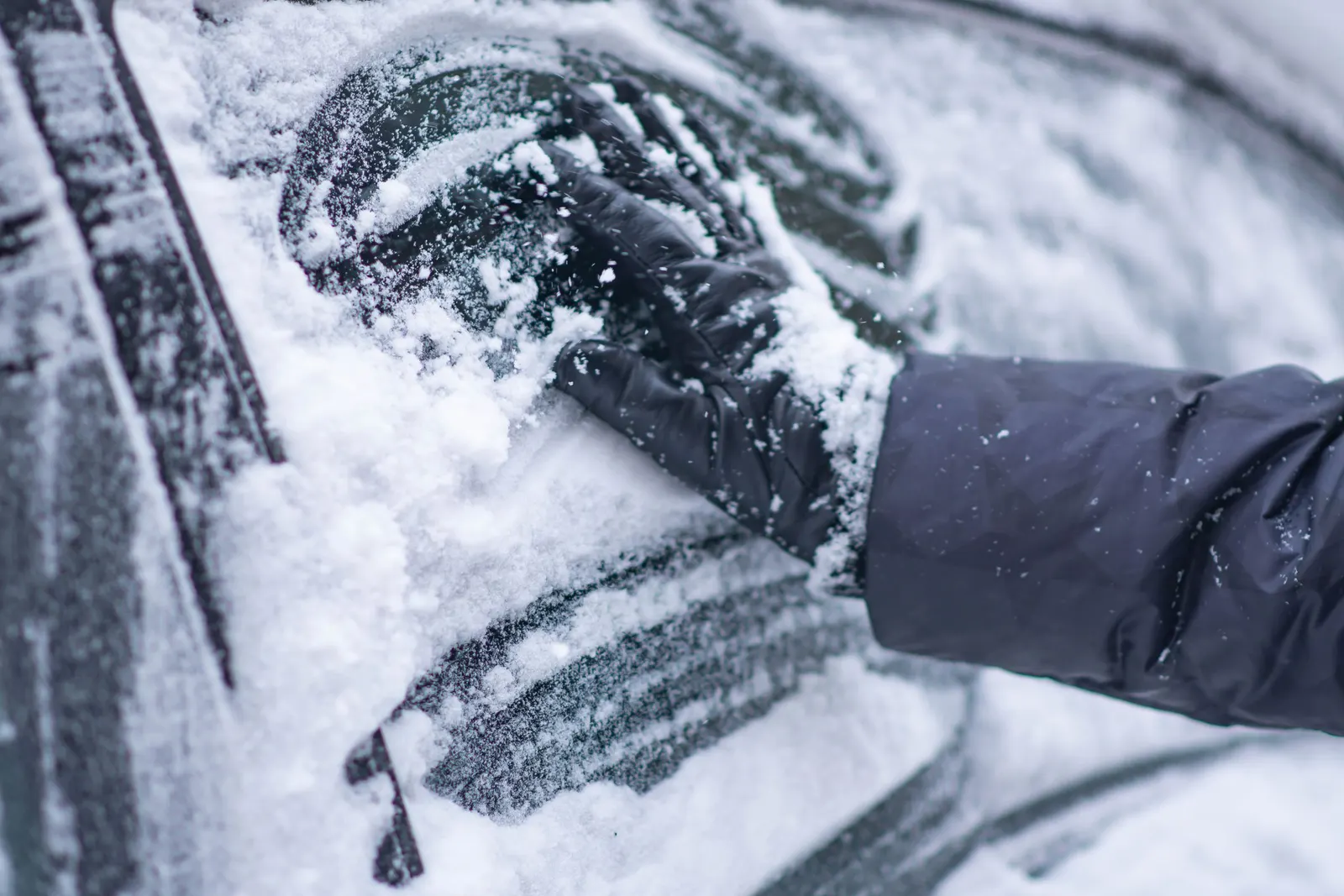
A lot of cold-start advice is written for places where sub-zero mornings are routine. South Jersey is different. NOAA's 1991-2020 climate normals for Philadelphia International Airport, across the Delaware River from South Jersey, show it:
- December: average low 31.2°F, with 17.2 nights at or below 32°F and 2.2 nights at or below 20°F.
- January: average low 26.0°F, with 22.5 nights at or below 32°F and 7.4 nights at or below 20°F.
- February: average low 27.5°F, with 19.6 nights at or below 32°F and 4.6 nights at or below 20°F.
Source: NOAA NCEI U.S. Climate Normals, 1991-2020, station USW00013739.
That is about 59 nights at or below freezing from December through February. But January averages only 1.5 nights at 10°F or colder, and 0.0 nights at 0°F or colder. So when a car will not start at 25°F here, the cold usually found a weak battery rather than killing a good one. That is why the first step in Camden County is a battery and charging-system test.
New Jersey's 3-Minute Idling Rule, and What It Means After a Jump
New Jersey bars a gasoline car from idling "for more than three consecutive minutes if the vehicle is not in motion" (N.J.A.C. 7:27-15.8). Here is what that means on a cold morning:
- No warm-up exception. The rule's exceptions include sitting in traffic and a car being repaired when the engine must run. Warming the cabin is not one of them. The rule says its work-engine exception "does not apply to passenger compartment heating."
- No remote-start exception. The rule counts how long the engine idles. It says nothing about how the engine was started.
- Diesels get one cold-weather allowance. A diesel stopped for three hours or more may idle up to 15 minutes when it is below 25°F (N.J.A.C. 7:27-14.3). Gasoline cars get no such allowance.
- The fines. NJDEP lists $250 for a first offense, $500 for a second, and $1,000 for a third and each one after. The vehicle's registered owner and the property owner can both be penalized (NJDEP Idling Fact Sheet, revised April 2025).
- Who enforces it where. The same fact sheet says DEP cannot enforce the rule on public roads or on residential property. State and local police can enforce it on public roads. On other property, such as a store or workplace lot, the property owner can be penalized as well as the vehicle owner.
After a jump: drive it, don't idle it
The old advice is to let a jumped car idle for 20 minutes to recharge. In New Jersey that breaks the three-minute rule, and it is a poor plan anyway:
- Idling goes nowhere. The DOE notes idling gets 0 miles per gallon, and an engine warms up faster being driven (fueleconomy.gov).
- A short hop may not be enough. Crown Battery says short drives may not fully recharge a battery. Drive one block, shut it off, and you may need another jump.
- Go straight to a test. Remove the cables, drive the car to where it will be tested, and avoid shutting it off on the way.
- Keep the helper car's idle short. Mazda's manual, for one, has you run the helper car a few minutes before starting the dead one. Keep that inside three minutes.
Never warm up or run a car in a closed garage. NHTSA warns about carbon monoxide and says to keep the exhaust pipe clear of snow (NHTSA).
How to Jump-Start a Car Safely in Freezing Weather
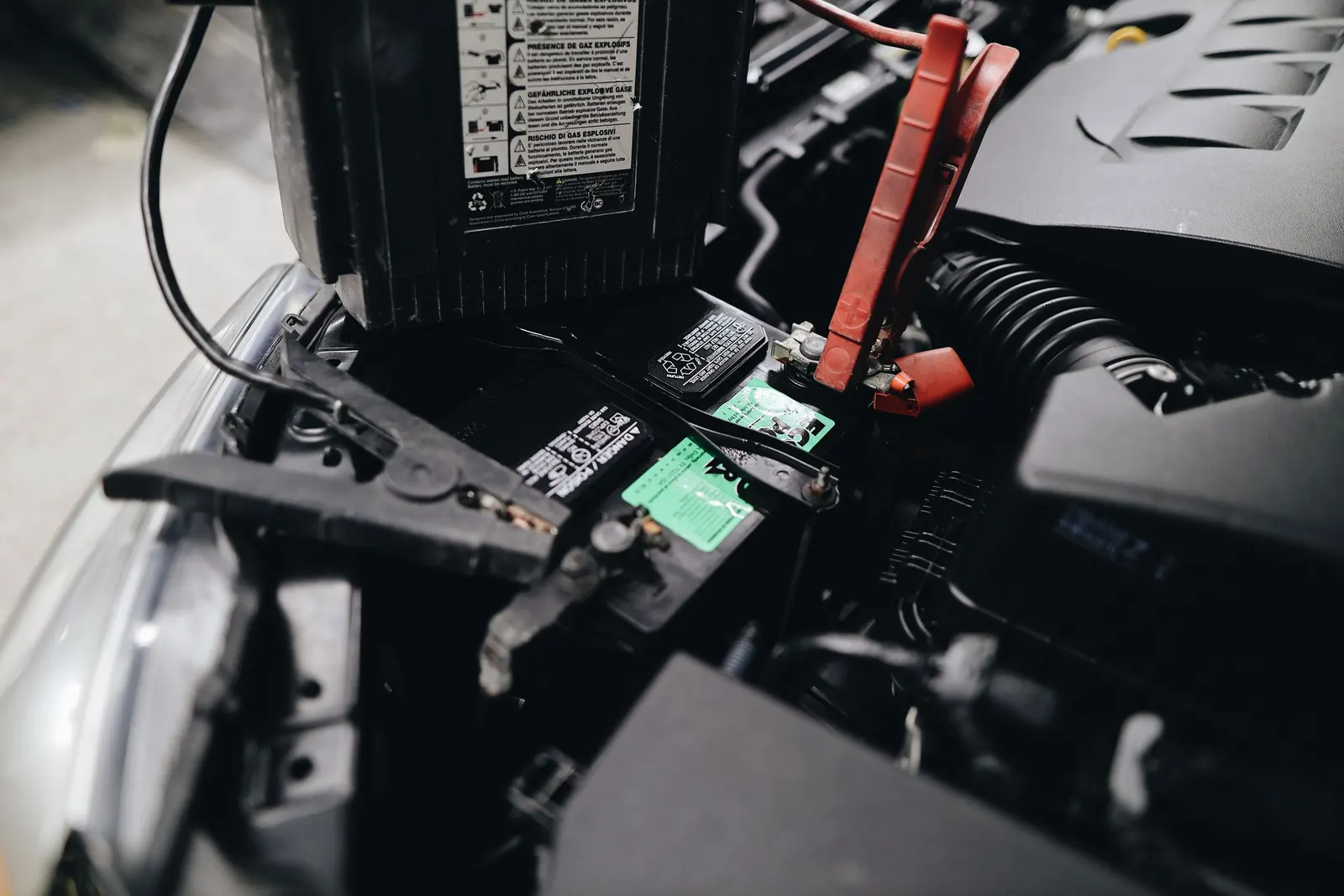
Your owner's manual has the final word, because connection points differ from car to car. These steps follow the jump-starting sections of the Mazda and Kia owner's manuals:
- Rule out a frozen battery. Do not jump a battery that may be frozen, such as one that sat flat through a hard freeze or has a swollen or cracked case. Both manuals warn it may rupture or explode.
- Use a 12-volt source only. Both manuals warn that a 24-volt supply can damage the starter and other electrical parts.
- Keep the cars apart and the loads off. The two cars must not touch. Turn off unneeded lights and accessories in both.
- Connect in order. Red to the dead battery's positive post, then to the good battery's positive post. Black to the good battery's negative post. The last clamp goes on a bare metal ground point on the dead car, away from its battery.
- Start the helper car, then the dead one. Keep the helper car's idling short.
- Remove the cables in reverse order, then drive the car that was dead.
Kia's manual explains the last clamp: connecting it to the dead battery's negative post can make that battery overheat and crack. Mazda's manual adds that batteries give off hydrogen gas, which a spark or flame can ignite. Keep sparks and flames away from the battery.
Battery Is Good, but the Car Still Won't Start
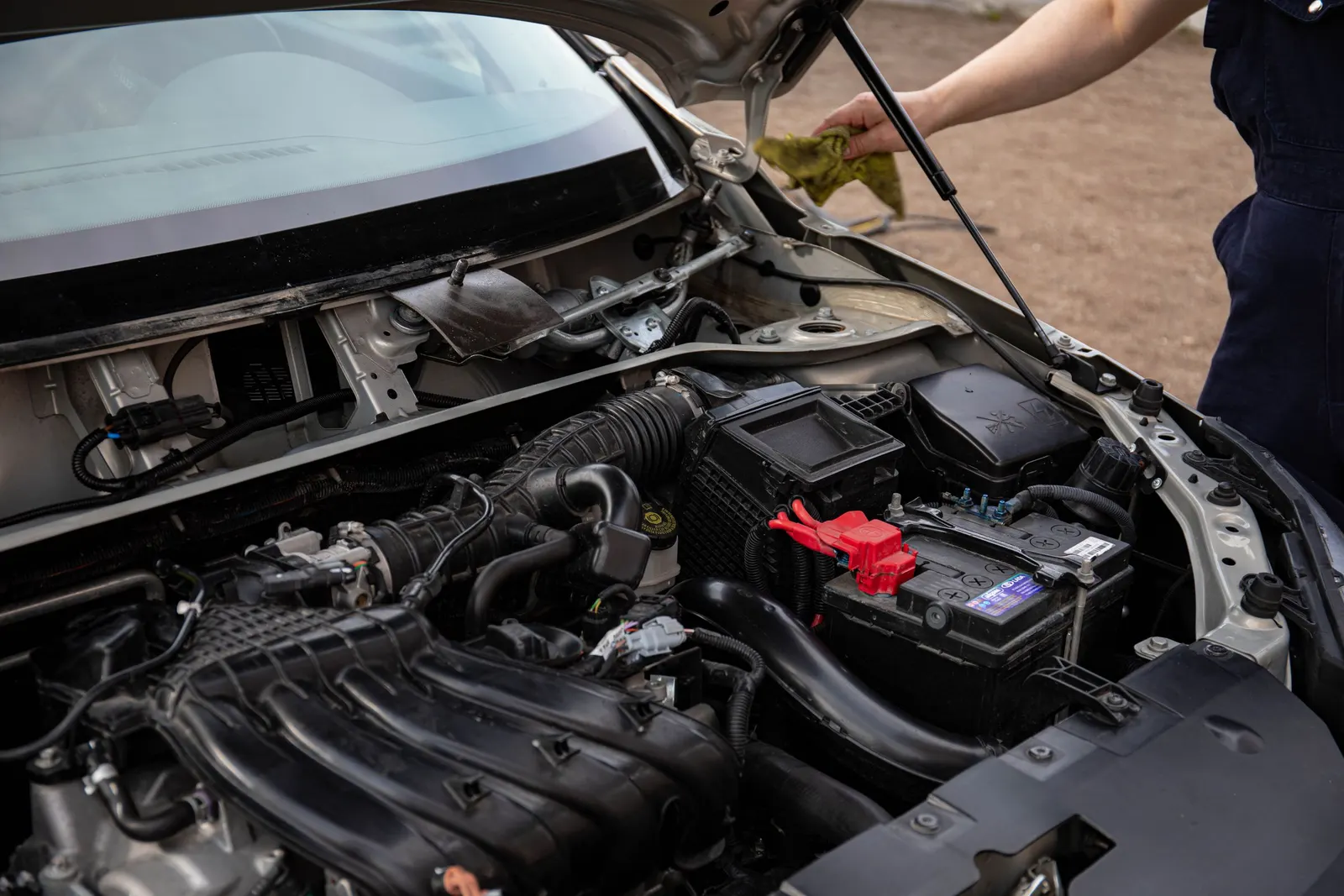
If a jump changes nothing, or the battery just tested fine, look past the battery:
- Normal crank, never fires. That points to fuel, ignition, or a sensor. A scan and targeted tests find it faster than more cranking. See engine diagnostics.
- One click, bright dash. Look at the starter, its relay and the main cables. See electrical systems.
- Dead again after a jump. The alternator may not be charging, or something stays on after you lock the car and drains the battery overnight.
- Corroded or loose terminals. Crown Battery says connections should be clean and tight. Corrosion comes off with a stiff wire brush, worn with protective gear (Crown Battery).
- Oil too thick for the cold. The DOE says to use the oil your manufacturer recommends for cold-weather driving (fueleconomy.gov).
A voltmeter helps but does not settle it. Crown Battery says a battery at rest should read 12.4 volts or higher. A battery can pass that and still fall short when the starter pulls on it. That is why our battery service starts with a load test.
At What Temperature Does a Car Battery Freeze?
It depends on how charged it is. Trojan Battery, a lead-acid battery maker, says a fully charged battery's electrolyte freezes at -92°F. At 40% charge it freezes at about 16°F (Trojan Battery FAQ). As the charge drops, the electrolyte becomes more like water.
Around Audubon, January averages 7.4 nights at 20°F or colder (NOAA, above). A healthy, charged battery is far from its freezing point on those nights. A run-down one left sitting is much closer. That is one more reason to deal with a slow crank before a cold snap, not after.
How to Prevent the Next Cold No-Start
- Test before the hard cold. NHTSA's winter list says to have a mechanic check the battery, the charging system and the belts (NHTSA).
- Combine short trips. The DOE suggests combining trips so you drive less often with a cold engine. Crown Battery adds that short drives may not fully recharge the battery.
- Use a maintainer if the car sits. Crown Battery recommends a trickle charger for a car that is stored or not driven through the winter.
- Keep terminals clean and tight. Crown Battery says battery connections should be clean, in good shape and secured tightly.
- Match the cold cranking amps. Cold cranking amps (CCA) measure the current a battery delivers for 30 seconds at 0°F without dropping below 7.2 volts. Crown says a replacement should match or beat the original CCA rating.
- Park in a garage when you can. The DOE suggests parking somewhere warmer, such as a garage. Never run the engine with the garage door closed.
Getting It Tested in Audubon
AutoBlast is at 21 S. White Horse Pike in Audubon. Call (856) 546-8880 first. If a jump gets the car running, drive it over without shutting it off on the way. We test the battery and the charging system before replacing anything. If the battery fails, we fit the type your car was built for. The details are on our battery testing and replacement page.
If the car will not take a jump, call and tell us what happens when you turn the key or press the start button. If the battery turns out fine, our car won't start guide covers starter, fuel and ignition causes in more depth.
Common Questions
Should I let my car idle to recharge the battery after a jump?
No. In New Jersey, idling for more than three minutes in a car that is not moving breaks N.J.A.C. 7:27-15.8. Drive it instead. Then get the battery and charging system tested, because a jump does not tell you why the battery went flat.
Is it illegal to warm up my car in the driveway in New Jersey?
The three-minute limit has no warm-up or driveway exception. NJDEP's fact sheet says the department does not enforce the rule on residential property or public roads, and police can enforce it on public roads. The DOE adds that most manufacturers recommend driving off gently after about 30 seconds.
How do I warm up a car battery in the cold?
Do not put a flame near it. Kia's and Mazda's manuals both warn that batteries give off hydrogen gas that sparks or flames can ignite. Charge it with a battery charger, following the charger's instructions, or jump it the way your manual describes. If the car will sit, a maintainer keeps the charge up.
Can a car battery freeze in New Jersey?
A charged one is unlikely to. Trojan Battery puts a fully charged battery's freezing point at -92°F. A battery at 40% charge can freeze at about 16°F, and January averages 7.4 nights at 20°F or colder at the Philadelphia airport station. Never jump a battery that may be frozen.
Sources
All checked November 9, 2026:
- N.J.A.C. 7:27-15.8, idle standard for gasoline vehicles
- N.J.A.C. 7:27-14.3, idling rules for diesel vehicles
- NJDEP Idling Fact Sheet, revised April 2025
- NHTSA, Winter Driving Tips
- U.S. Department of Energy and EPA, Fuel Economy in Cold Weather
- NOAA NCEI, U.S. Climate Normals 1991-2020
- Crown Battery, Car Battery Maintenance for the Winter
- Optima Batteries, Cranking Power When You Need It Most
- Trojan Battery, FAQs
- Kia owner's manual, jump starting
- Mazda owner's manual, jump-starting
Need Help With Your Vehicle?
AutoBlast is Camden County's trusted auto repair and body shop. Send the page you are reading with your vehicle details, or call the shop for faster help.