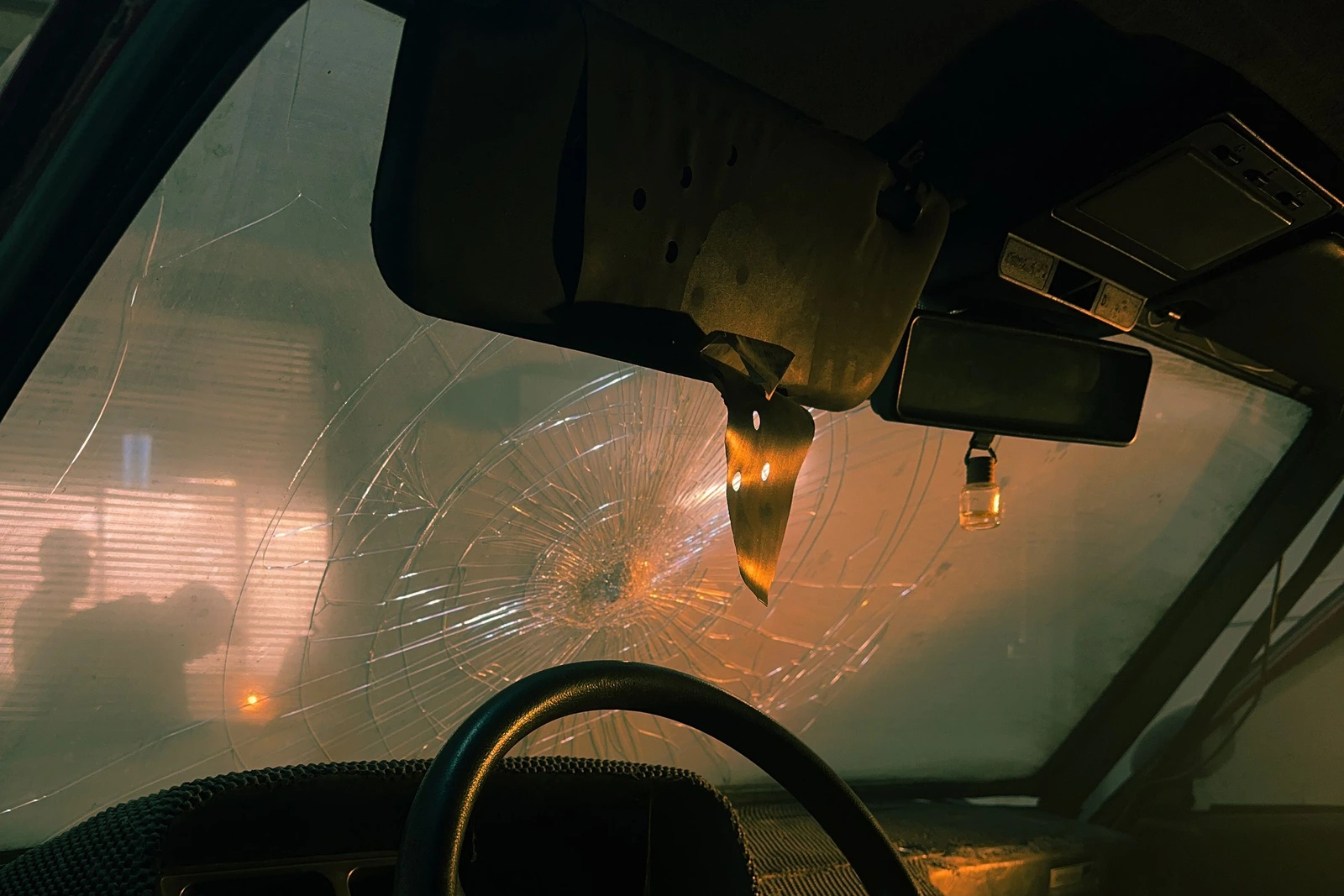
The shape of the damage decides the fix. The glass repair industry's standard, the Repair of Laminated Auto Glass Standard (ROLAGS), names the types of damage: bullseye, half moon, star break, combination break, crack and surface pit. It also sets the size limit for each that a technician should repair (ROLAGS 002-2022).
- A bullseye up to 1 inch across can be repaired.
- A single crack up to 14 inches long can be repaired.
- A stress crack, which runs in from the edge with no impact point, should not be repaired at all.
At AutoBlast in Audubon, NJ, our published range for repairing one chip is $0 to $80. A basic windshield replacement is $250 to $500. The final price is confirmed once we see the glass.
The Types of Windshield Cracks at a Glance
| Type | What it looks like | Repairable up to |
|---|---|---|
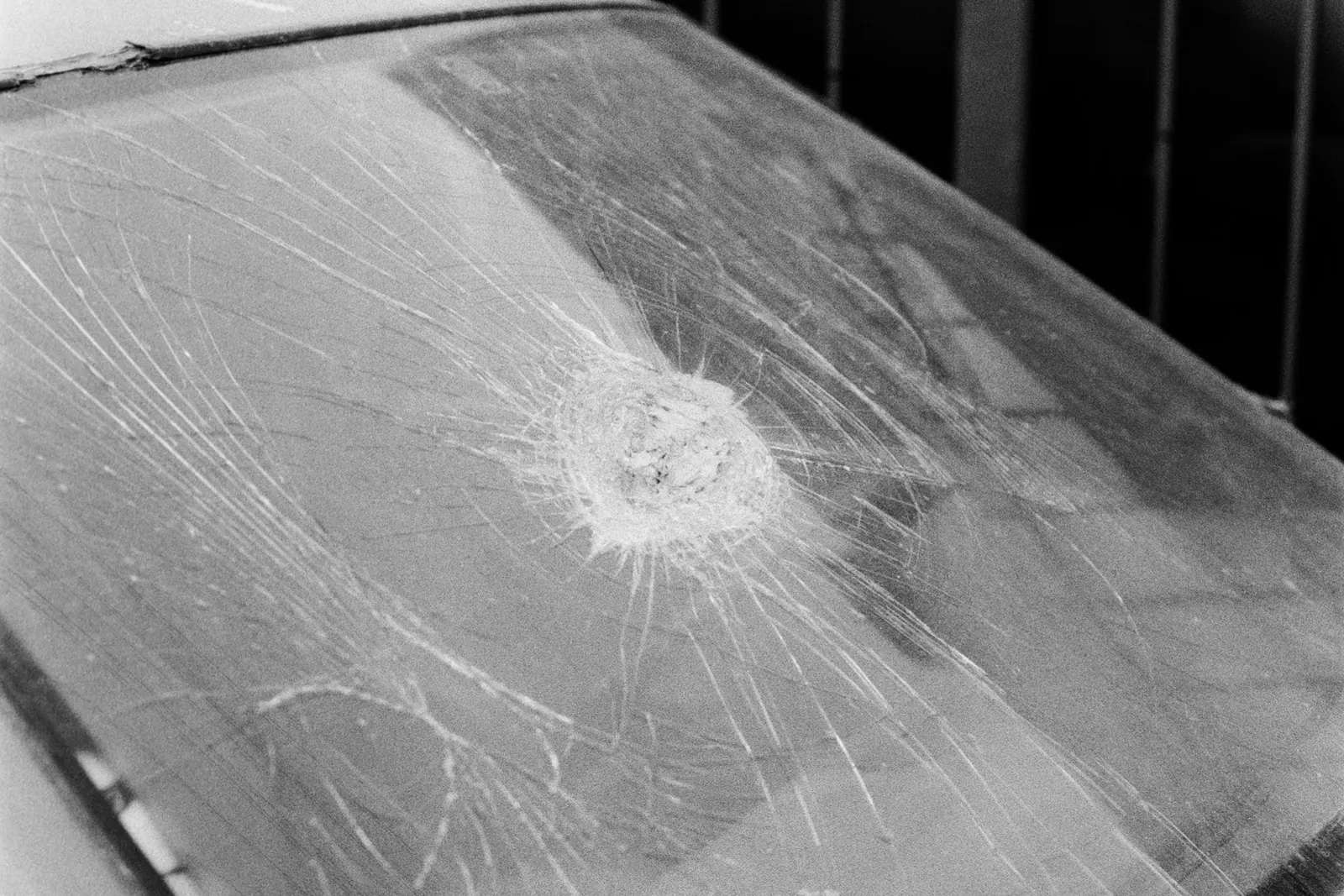
| Bullseye | A dark circle around the point where the object hit | 1 inch (25 mm) across |
| Half moon | Half of a bullseye | 1 inch (25 mm) across |
| Star break | Cracks, called legs, running out from the break | 3 inches (75 mm) across |
| Combination break | A mix, such as a star inside a bullseye, or a break with cracks running out of it | 2 inches (50 mm) across the body, not the legs |
| Floater crack | A single line that does not reach the edge of the glass | 14 inches (350 mm) long |
| Edge crack | A single line that runs to an edge | 14 inches (350 mm), touching one edge only |
| Stress crack | A line that runs in from an edge with no impact point | Not repairable: replace |
Source: the definitions in clause 4 and the sizes in clause 6 of ROLAGS 002-2022, approved December 8, 2022. The edge crack and stress crack limits are in its clause 7.
The standard also sorts cracks by length. A crack of 6 inches or less is a short crack. Anything longer is a long crack. That difference matters in the next section.
One more type on the standard's list is not a crack: the surface pit, a nick from normal wear that does not reach the plastic layer. The standard's repairable size for it is 1/8 inch (3 mm) across or more.
How to Tell Which One You Have
- Find the impact point. A bullseye, half moon, star or combination break has one: the spot where a stone or other object struck. A stress crack has none and starts at the edge of the glass.
- Measure it. Use a tape measure or ruler across the widest part of the break, or along the full length of a crack.
- Note where it sits. Is it in front of the driver, touching an edge, or near the camera and sensors behind the mirror?
- Look from inside the car too. Damage on the inside layer of the glass is a replacement under the standard.
When the Standard Says Replace, Not Repair
A windshield is laminated glass. The standard defines that as two or more layers of glass with a non-glass layer between them. A repair fills a break with resin. ROLAGS recommends replacement instead when:
- The damage goes through both the inside and outside layers of glass.
- Three or more long cracks run from a single impact point.
- The damage is on the inside layer.
- Dirt or other matter in the break cannot be cleaned out.
- The plastic layer between the glass is damaged or discolored.
- The damage or the repair could affect built-in features such as a rain sensor or a head-up display.
- The pit is larger than 3/8 inch (9 mm).
- An edge crack reaches more than one edge.
- It is a stress crack.
- The technician judges that the repair would affect how the vehicle operates.
The rules are tighter right in front of the driver. The standard calls this the Driver's Primary Viewing Area: a strip 12 inches wide, centered on the driver, from the top to the bottom of the wiper sweep. In that strip, it says not to repair:
- Damage larger than 1 inch (25 mm) across.
- Damage that would leave a finished pit larger than 3/16 inch (5 mm).
- A break within 4 inches (100 mm) of another repair.
Why the Answer Changes From Shop to Shop
The standard sets the outer limit. Shops can draw their own line inside it:
- ROLAGS: a single crack up to 14 inches can be repaired.
- Safelite: repair is "typically still possible" when the crack is shorter than six inches, has not branched, has not reached the edge and the inner layer is intact (Safelite).
- AutoBlast: chips smaller than a quarter and cracks shorter than 3 inches can usually be repaired. We recommend replacement when the damage is in the driver's direct line of sight, the crack is over 6 inches, there are several chips in the same area, or a chip is at the edge of the glass. That rule is on our glass repair page.
So a 10-inch crack is inside the standard's limit, but it is past Safelite's six inches and past the 6 inches at which our glass page recommends replacement. Before you agree to a repair anywhere, ask which rule the shop follows.
Why Windshield Cracks Spread in a South Jersey Winter
Among the things Safelite lists as making a crack grow (Safelite):
- Temperature swings. Glass expands and contracts with temperature, and the crack is where that stress concentrates.
- Water in the crack. It works its way in and weakens the glass around it, most of all when it freezes and expands overnight.
- Hot air on cold glass. Rapid temperature changes from the climate system are, in Safelite's words, "one of the fastest ways to extend a crack."
- Potholes and slammed doors. Rough roads flex the windshield frame, which widens the crack. Safelite lists slamming the doors or the trunk as well.
South Jersey has plenty of freezing nights. NOAA's 1991-2020 normals for the Philadelphia International Airport station, across the Delaware River from South Jersey, average 17.2 nights at or below 32°F in December. January averages 22.5 and February 19.6 (NOAA NCEI).
The standard also gives a second cause besides impact: stress or twist. In its words, "a crack occurs when a windshield is twisted, either by flexing within the vehicle frame or because of improper mounting."
What to Do Until It Is Fixed
Safelite's advice for slowing a crack down (Safelite):
- Cover it with clear packing tape. It keeps water and dirt out. It is not a repair.
- Let the glass warm up gradually. Do not blast hot air at a cold windshield.
- Never pour hot water on a frosted windshield.
- Park in a garage or in the shade when you can. Close doors gently and avoid rough roads.
- Skip the kit on a long crack. Safelite says not to use a DIY kit on a crack longer than an inch or two.
Frozen washer fluid on the same morning? Our frozen washer fluid guide covers that.
Is it safe to drive on? Safelite's answer depends on size and location. A small chip or crack away from your line of sight "may be drivable in the short term." A crack that blocks your view, sits near the edge or is spreading "should be addressed before driving."
When the Glass Broke in a Collision
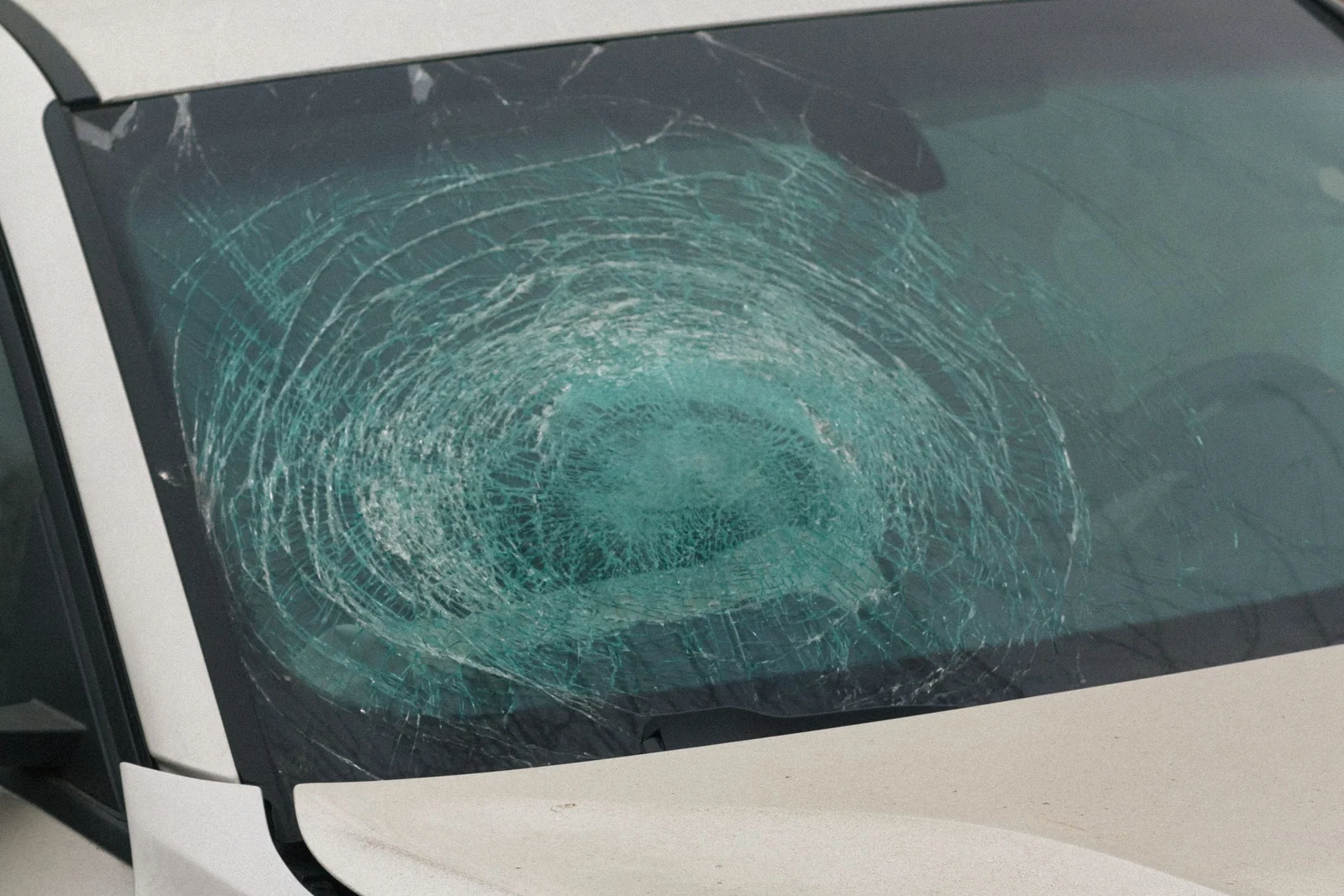
A windshield broken in a crash is often only part of the damage. AutoBlast does both collision repair and glass work at 21 S. White Horse Pike, so the body and the glass can be looked at in one visit.
What Each Fix Costs at AutoBlast
| Job | AutoBlast's published range |
|---|---|
| One chip repaired | $0 to $80 |
| Two or three chips | $80 to $150 |
| Windshield replacement, no driver-assist camera | $250 to $500 |
| Replacement with a driver-assist camera, recalibration included | $500 to $1,200 |
| Replacement with a rain sensor and heated wiper area | $400 to $900 |
| Luxury or European windshield with a head-up display or acoustic glass | $700 to $2,500 |
These are the chip and windshield ranges listed on our glass repair page, which also prices side and rear windows. The final price is confirmed after we see the glass and the car. For insurance questions and how replacement prices vary by car, see our windshield replacement cost guide. Whether windshield damage matters for a New Jersey inspection is covered in our NJ car inspection guide.
Questions Drivers Ask
What windshield cracks can be repaired?
Under ROLAGS: a bullseye or half moon up to 1 inch across, a star break up to 3 inches, a combination break up to 2 inches across its body, and a single crack up to 14 inches. Among the cases the standard lists as replacements: stress cracks, damage through both layers, and damage over 1 inch in front of the driver. A shop can set a tighter limit; our glass page says cracks shorter than 3 inches can usually be repaired.
What is the difference between a stress crack and an impact crack?
An impact crack runs from a point where something hit the glass. A stress crack runs in from an edge and has no impact point. The standard says to replace a windshield with a stress crack, not repair it.
What causes a windshield to crack on its own?
The standard names stress or twist: the windshield is twisted by flexing within the vehicle frame or by improper mounting. Temperature swings can also lengthen a break that is already there.
Where can I get it looked at near Audubon?
Call (856) 546-8880 or stop by 21 S. White Horse Pike in Audubon. We see drivers from Audubon, Haddonfield, Collingswood, Cherry Hill and the rest of Camden County.
Need Help With Your Vehicle?
AutoBlast is Camden County's trusted auto repair and body shop. Send the page you are reading with your vehicle details, or call the shop for faster help.